
Tower Farming 101: How Tower Farming Cuts Labor and Maximizes Space
Who says a farm has to spread across acres of land? Sometimes, the best direction to grow is up! 🌱
Imagine walking into a greenhouse, stepping onto a rooftop or visiting a school and seeing rows of fresh lettuce, herbs and vegetables growing vertically from tall towers.
No traditional soil beds. No long rows of crops stretching into the distance. Just fresh produce growing upward!
That's the idea behind Tower Farming, a form of vertical farming that uses upright growing systems to produce food in a different way.
With Tower Garden aeroponic technology, plants grow in ports around the towers while water mixed with mineral nutrients circulates through the system to reach their roots.
It's an approach that can bring fresh food production into greenhouses, suitable rooftops, schools, restaurants and other locations where conventional farming might be difficult.
But how does it actually work? And what does it take to turn a collection of towers into a working farm?
Let's take a look! 🌿

Jump to a Section
Looking for something specific? Jump directly to the section you need.
💧 How Does Tower Farming Actually Work?
Let's start with the basics.
Instead of growing plants in traditional soil beds, Tower Gardens hold plants in growing ports positioned around a vertical tower.
The roots extend into an enclosed chamber inside the tower, where they receive water and dissolved mineral nutrients.
Here's what happens:
- Water and nutrients: A reservoir holds water mixed with mineral nutrients.
- The pump: A pump moves the nutrient solution to the top of the tower.
- Root delivery: The solution flows down through the tower, reaching the plant roots.
- Recirculation: Water that isn't taken up by the plants returns to the reservoir to be used again.
- Plant growth: With suitable light, nutrients, water and growing conditions, the plants continue developing until they're ready to harvest.
Pretty clever, isn't it?
And because the roots receive water and nutrients inside the system, there's no need for traditional soil beds.
Where Do the Plants Come From?
Tower Farms typically start with young seedlings.
Depending on the operation, growers may propagate their own plants or source seedlings from a supplier.
Those seedlings are transplanted into the growing ports, where they continue growing until harvest.
For commercial operations, keeping seedlings ready on schedule is important. After all, an empty growing port isn't producing anything!
Does Tower Farming Save Water?
One of the advantages of a recirculating growing system is that water and nutrients can be reused rather than continually draining away.
That can help reduce water consumption compared with some traditional irrigation methods.
Of course, plants still use water, and you'll still need to account for evaporation, reservoir changes, cleaning and maintenance.
Actual water use depends on your crops, climate, equipment and how the farm is managed.
💧 Want to understand the basics? Our Tower Garden Water Guide explains water quality, reservoir care and other important growing considerations.
🌿 Why Grow Up Instead of Out?
Traditional farming usually spreads plants across the ground.
Tower Farming takes a different approach by placing growing sites at multiple heights around each tower.
That means you can make use of vertical space, which may be particularly valuable when suitable land is limited or expensive.
Think about rooftops, greenhouses, urban locations and other spaces where growing long rows of crops simply isn't practical.
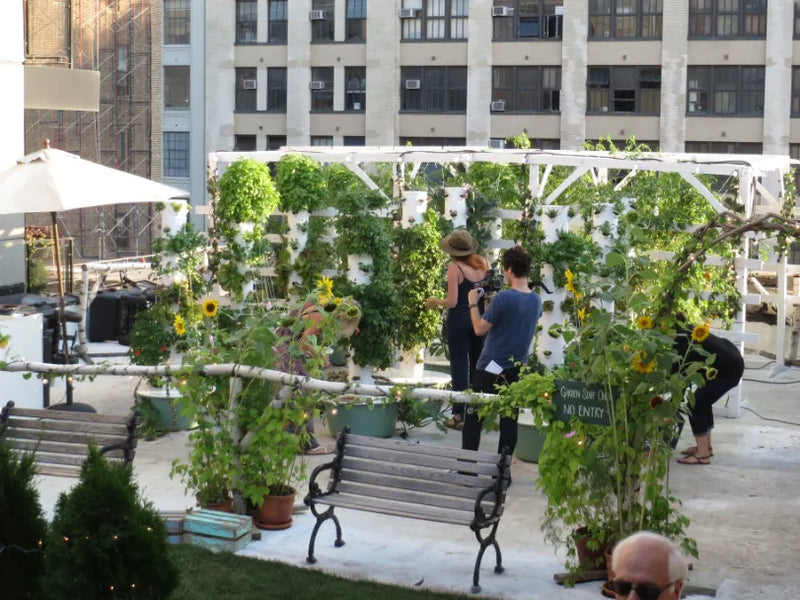
Does That Mean You Can Pack Towers Into Every Available Inch?
Well... not quite! 😄
Plants still need room to grow, and the people caring for them need room to work.
A productive Tower Farm layout should allow for:
- Space for mature leaves and plant growth
- Suitable light reaching the crops
- Good airflow around the towers
- Walkways for planting and harvesting
- Access for cleaning and maintenance
- Equipment, propagation and harvest handling
And if you're considering a rooftop farm, you'll need additional planning for structural load capacity, safe access, utilities and local requirements.
The goal isn't simply to fit the greatest number of towers into a space. It's to create a farm that can produce healthy crops efficiently.
For more on layouts and labor, explore How Tower Farming Can Reduce Labor and Maximize Space.
🔧 Does Tower Farming Require Less Work?
Here's one of the things people find exciting about Tower Farming.
Because you're not growing in traditional soil beds, there's no soil to till and no rows of weeds to pull from around your crops.
And with pumps, timers and commercial nutrient-delivery equipment, parts of the watering and feeding process can be automated.
Sounds wonderful, right?
It is! But let's clear up one common misconception.
Automated watering doesn't mean you can switch everything on and head off on vacation! 🏖️
A Tower Farm still needs regular attention and a well-organized routine.
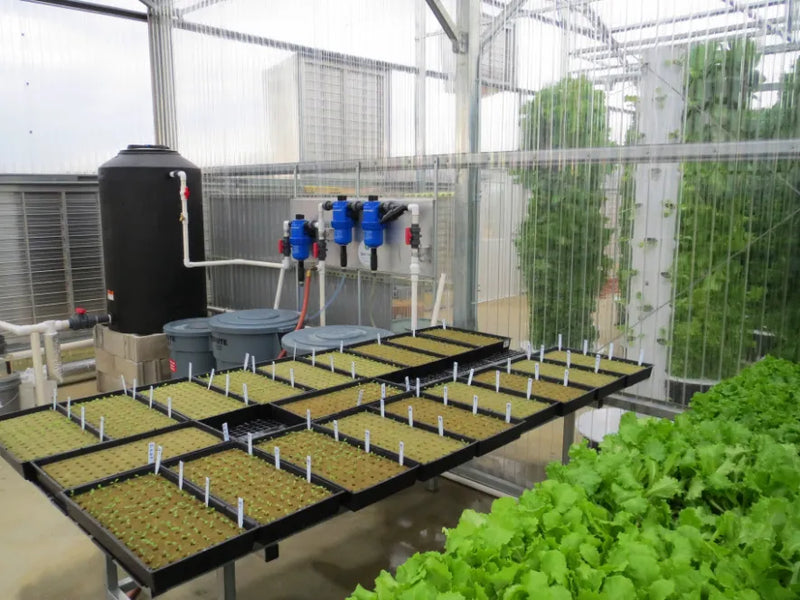
What Does Daily Tower Farm Care Involve?
- Seedling production: Starting or sourcing healthy seedlings and keeping planting batches on schedule.
- Plant monitoring: Checking growth, crop health and signs of pests or disease.
- Water and nutrients: Monitoring water quality, nutrient levels and pH.
- Equipment checks: Making sure pumps, timers and other systems are working properly.
- Harvesting: Picking crops at the right stage and to the required quality.
- Packaging and distribution: Preparing produce for customers or other users.
- Cleaning: Maintaining the towers and supporting equipment.
And don't forget weekends, holidays and staff absences.
Plants don't know it's Sunday, and they certainly won't wait until Monday if the pump stops working!
🌱 Our advice: Every Tower Farm needs someone responsible for daily operations and a trained backup who can step in when needed. Good systems help, but good people are still essential.
🥬 What Can You Grow in a Tower Farm?
Now for everyone's favorite question: what can you grow?
Quite a variety of things!
Many leafy greens, lettuces and herbs are particularly well suited to vertical aeroponic growing.
Depending on the growing environment, system layout and crop variety, fruiting and specialty crops may also be possible.
Some crops to consider include:
- Lettuce: Butterhead, romaine, leaf lettuce and other varieties.
- Leafy greens: Kale, chard, bok choy and similar crops.
- Herbs: Basil, cilantro, parsley, mint and other culinary favorites.
- Specialty greens: Selected salad mixes and other crops suited to the growing conditions.
- Fruiting crops: Certain tomatoes, peppers and other varieties where adequate light, space and support are available.
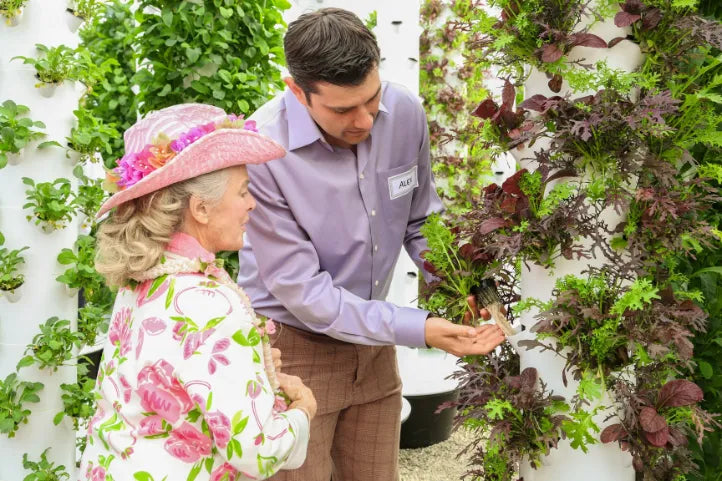
But What Should You Grow Commercially?
That's a slightly different question!
Just because a plant grows beautifully in a tower doesn't mean it's automatically a profitable crop for your business.
You'll also need to think about:
- What your customers actually want
- How long the crop takes to grow
- How much usable produce you can harvest
- How much space each plant needs
- The labor involved in harvesting and packaging
- The price customers are willing to pay
For commercial farms, matching your crop plan to your customers is just as important as choosing plants that grow well.
🏫 Who Can Use a Tower Farm?
Tower Farming isn't limited to traditional agricultural businesses.
One of the interesting things about vertical growing is how many different types of organizations can use it.
👩🌾 Commercial Produce Growers
Commercial growers can use Tower Farms to produce selected crops for restaurants, farmers markets, grocery buyers or subscription customers.
Production planning, crop selection and customer demand all play an important role in making the operation work.
🎓 Schools and Universities
Imagine students learning about plant science, nutrition and food production while watching their own crops grow!
Tower Farms can provide hands-on learning opportunities and, where properly planned, may also support food production for school programs.
🍽️ Restaurants, Hotels and Resorts
Fresh herbs and greens growing close to the kitchen? That's an appealing idea for chefs!
Restaurants and hospitality businesses may use Tower Gardens to grow selected ingredients while giving guests a closer connection to where their food comes from.
🤝 Community Organizations
Community projects can combine local food production with education, volunteer involvement and distribution programs.
As with any growing project, they'll need a plan for ongoing maintenance and how the harvest will be used.
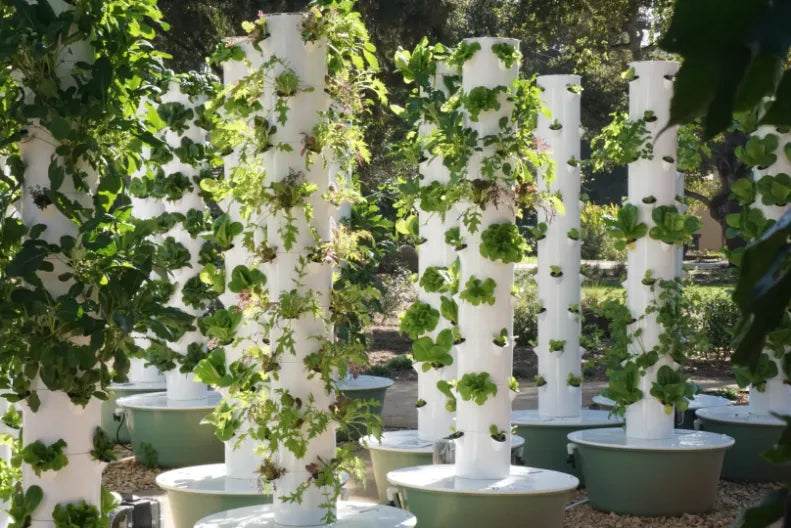
Want to see real examples? Visit our Tower Farms in Action collection to explore projects in schools, businesses and communities.
☀️ Outdoor, Greenhouse or Indoor Tower Farming?
One of the first decisions when planning a Tower Farm is choosing where you'll grow.
There are three main options:
☀️ Outdoor Tower Farms
Outdoor growing makes use of natural sunlight but exposes crops to local weather conditions.
It's important to consider seasonal temperatures, wind, rainfall and the crops suited to your climate.
🌿 Greenhouse Tower Farms
Greenhouses offer some protection from the weather while still using natural sunlight.
However, you'll need to plan for ventilation, temperature and humidity management, and possibly supplemental lighting.
💡 Indoor Tower Farms
Indoor farms can offer greater control over growing conditions, but generally require suitable grow lights and environmental equipment.
Those systems need to be included in both your setup and operating budgets.
🌿 Which option is best? That depends on your climate, crops, space and production goals. There's no single growing environment that's right for every Tower Farm.
We've put together a more detailed comparison in our Outdoor vs. Greenhouse vs. Indoor Tower Farms Guide.
📋 What Should You Consider Before Starting a Tower Farm?
It's easy to get excited about the towers themselves. But a successful growing project needs more than equipment.
Before you get started, think about these important questions:
- Purpose: Are you growing commercially, supplying a kitchen, teaching students or producing food for your community?
- Location: Where will the towers go, and what growing conditions will they experience?
- Water and power: Does the site have suitable utilities?
- Crops and customers: What will you grow, and who will use or purchase the harvest?
- Working space: Is there enough room for planting, harvesting, cleaning and storage?
- Budget: Have you included equipment, installation, labor and ongoing operating costs?
- Expansion: Could the space support additional production if the project grows?
What's the Difference Between a Tower Garden and a Tower Farm?
Good question!
A Tower Garden can be used by an individual home grower, school or organization to grow fresh produce.
A Tower Farm generally brings multiple growing towers together as part of a larger, planned growing operation.
Depending on the project, commercial Tower Farms may also include centralized irrigation, nutrient dosing, propagation equipment and other supporting infrastructure.
Is Tower Farming Better Than Traditional Soil Farming?
Not necessarily. They're different approaches, and each has its place.
Traditional soil farming can be a great option where suitable land is available and the crops fit that method.
Tower Farming can be worth exploring where space is limited, vertical growing is useful or produce needs to be grown close to the people using it.
The right choice depends on your crops, location, resources and goals.
Can You Start Small?
Absolutely!
You don't necessarily need to start with a huge commercial installation.
A smaller project can give you the opportunity to learn how your crops perform, refine your growing routine and test customer demand before investing in a larger operation.
For a more detailed look at the business side, read our 9 Things to Know Before Starting a Vertical Farm.
🌱 Need Help Planning Your Tower Farm?
At Living Towers, we can help you explore the practical details of your project.
Have a space? Share its dimensions and layout so we can discuss how many towers might fit.
Have a production goal? Tell us what you'd like to grow and how much you hope to harvest.
Have a budget? We can help you explore suitable options and identify other costs to consider.
Start with our Tower Farm Planning Guide, or contact Living Towers to tell us about your project.
Continue Learning
Ready to explore further? These resources will help you understand commercial Tower Farming, plan your growing project and see real farms in action.
📋 Tower Farm Planning Guide
Work through your growing goals, location, crop choices, budget and day-to-day operations.
Plan Your Tower Farm →🌿 Explore Tower Farms
Learn about commercial Tower Farm systems and the types of projects they can support.
Explore Tower Farms →🌱 Tower Farms in Action
See how schools, businesses and organizations are using Tower Farms in real-world growing projects.
Explore Farm Stories →
