
Measuring Minerals in the Resevoir - Understanding TDS Meters and Their Role in Tower Gardening
What is TDS and Why Should You Care for Your Tower Garden?
When it comes to growing in your Tower Garden, understanding TDS (Total Dissolved Solids) can be a game-changer! But don’t worry if you’re just starting out—we’re here to break it down for you. 🌿
- Do You Need a TDS Meter for Your Tower Garden?
- TDS and Your Tower Garden: The Ideal Ranges
- What Does a TDS Meter Cost?
- How To Use a TDS Meter: A Quick Guide
- A Few Important Notes
What is TDS Anyway?
TDS stands for Total Dissolved Solids, and it’s a fancy term for all the mobile, charged ions in your water. These include minerals, salts, and metals that dissolve in water. It’s like the stuff you don’t see but is working behind the scenes to keep your plants nourished. TDS is measured in milligrams per liter (mg/L) or parts per million (ppm)—and it’s easy to measure using a handy little device called a TDS meter.
So, why should you care about TDS? Well, knowing your TDS levels helps you understand how dense your nutrient solution is in your Tower Garden. This lets you figure out if it's time to add more Tower Garden Mineral Blend and ensures your plants get just the right amount of nourishment.
But here’s a little secret: you don’t have to obsess over your TDS readings to grow successfully with a Tower Garden. But more on that in a sec!
Do You Need a TDS Meter for Your Tower Garden?
The short answer? Nope! Thousands of happy gardeners across the U.S. have been growing lush, thriving Tower Gardens for years—without ever needing a TDS meter. As long as you stick to the provided instructions, including the timing and quantity of the Tower Garden Mineral Blend, you’re good to go! 🙌
TDS and Your Tower Garden: The Ideal Ranges
Now, if you want to get a little more precise, let’s talk about what your TDS levels should look like.
- General Range: 1500–1800 ppm
- Summer Range: 900–1500 ppm
But why the difference in summer? Good question! During those hot months, water in your Tower Garden evaporates, but minerals stick around. Too many dissolved solids in the heat can stress out your plants and mess with their growth. Lowering TDS in the summer ensures that your plants stay healthy and balanced. Think of it like keeping your garden cool and happy! 😎
What Does a TDS Meter Cost?
Great news: TDS meters come in all price ranges! You can pick up a basic model for as low as $15, or splurge on a high-end commercial unit for a few hundred bucks. For my home setup, I use a budget-friendly meter that costs around $22. It’s simple to use, measures ppm and temperature, and gets the job done. You can grab a similar model here on Amazon.
How to Use a TDS Meter: A Quick Guide
Okay, let’s dive into the fun part—how to use that TDS meter:
- Calibrate Your Meter: Most TDS meters need a little calibration before you get started. You'll want to use a calibrating fluid that matches the ppm range you’re working with. Tower Gardens generally run around the 1000 ppm range, so be sure to check the instructions that come with your meter.
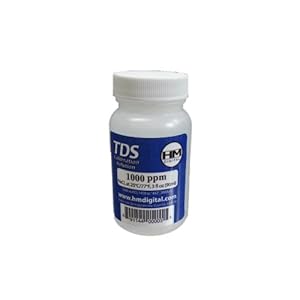
- Test Your Solution: Once calibrated, it’s time to test! Dip the meter in your Tower Garden water and let it measure the TDS. It’s that easy!
- Maintain Calibration: Over time, your meter might need recalibrating, especially if it’s been a while. Don’t worry though, calibrating fluids are affordable and usually under $10.
A Few Important Notes:
- Always double-check your pH levels after adding nutrients to the water. pH and TDS work together to keep your plants in tip-top shape.
- TDS measures the total amount of dissolved solids in the water but doesn’t break down exactly which minerals are high or low. So while it’s great for monitoring overall nutrient density, it won’t tell you if you’re running low on potassium or have too much copper, for instance.
- For best results, it’s a good idea to empty and refresh the reservoir every 30–60 days to avoid nutrient lockout and keep your plants thriving!
Ready to Start Your Tower Garden Journey?
If you don’t already have a Tower Garden, now’s the perfect time to dive in and start growing! Join the growing community of Tower Garden enthusiasts and watch your plants thrive. Click here to purchase your Tower Garden today and start growing the garden of your dreams!
Understanding TDS and managing it is a great way to fine-tune your Tower Garden experience—but remember, it’s totally optional. No matter how you approach it, happy growing is what matters most! 🌱✨

